EXPLORE THE ARTS AS A PARTICIPANT
Skill Chosen: The Programming Process
‘A goal without a plan is just a wish. “
― Antoine de Saint-Exupéry
Research: Programming
A process which varies depending on the scale, location, audience and amount of time to do it in.
Case study 1: Serious – EFG London Jazz Festival
Given the size of the EFG London Jazz Festival, Serious begins months up to a year in advance. By focusing on finalising its larger name acts first, this helps to shape the program. For example, particular set days relating to a certain theme centered around the Headline artist, or varying the days offering to provide a more diverse program at a certain venue. Serious are highly aware of the different audiences relating to different venues and bear this in mind to create a successful line-up with a varied program.
Case study 2: Glastonbury Festival : Smaller stages
The stages are split up into different programming teams given the scale and size of the project. The larger headliners for the Pyramid stage are normally organised by the directors and founding father’s daughter Emily Eavis. However, the smaller stage planning begins around January with Olivia Pryle and Naomi Nekesa scouting through attending shows. Their aim is to produce an eclectic line-up to cater for a diverse audience moving away from London centricity.
Source: http://music.britishcouncil.org/news-and-features/2016-08-31/blog-glastonbury-behind-the-headliners
Case Study 3: Celtic Connections
Following a debrief from March to June, July to October is spend getting the programming into shape to be announced and on sale from mid-October. Giving the event takes places in January, the less busy period is advantageous regarding availibility but requires more persuasion as fewer artists tour/perform at this time. For the programmers, building on their traditional fan base is just as important as keeping the festival fresh and exciting.
Source: https://www.artsprofessional.co.uk/magazine/article/how-programme-festival
How to find artists?
There are numerous different ways to find new music/artists. Discussing this with the Serious team uncovered new possibilities, especially given the already established talent development schemes. Poignany examples include using sources readily available, such as mixes, trusted blogs (The Quietus, The Wire), and radio shows like Gilles Peterson and Radio 4 Weird Britain.
Experience
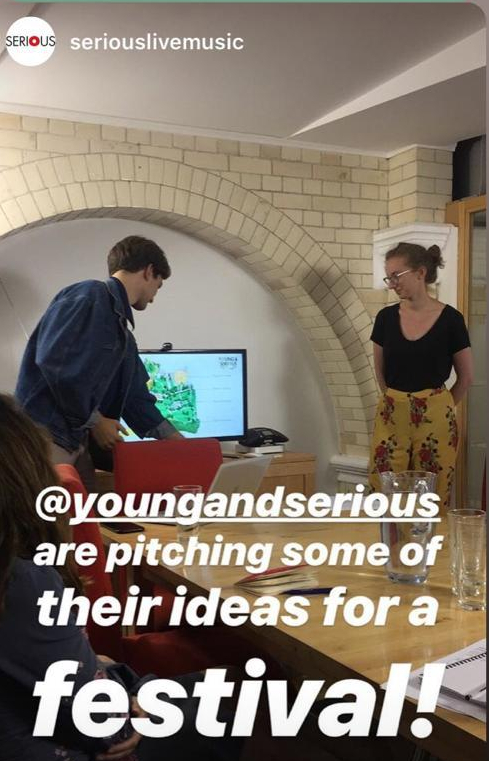
In order to get a greater understanding, a fellow Young & Serious participant Henry and I decided to mock-up our own programme of events for a festival.
In light of the previous case studies and research, we intended to carve out a series of events that not only allowed for diverse, relevant and exciting artists but add in our own branded element to the core. With the links to Serious, jazz would be a centrepiece. However, our intention was to make it family friendly which affected our decision making process.
Step 1: Decide on a venue, theme and number of stages.
Step 2: Split up stages for programmers, think of venue restrictions, decide on set time lengths.
Step 3: Mock up a list of potential artists for the dates and times baring in mind numerous core factors including:
– If they are touring around that time? Do they have any releases around then? Artists are careful not to oversaturate the market and to keep high ticket sales over high number of concerts.
– What kind of audience would want to see them?
-What time slot would best suit their energy, style and audience?
– If they couldn’t make it, the budget didn’t allow for it or the artist declined, who could fill that spot instead?




On reflection
After presenting our mock up festival plan, we received valuable feedback regarding our line-up to make sure if we sought regional variation, we went for it. Also regarding L&P programming, taking into account factors such as nap time and pull factor initiatives for families including bring your own picnic.
A large amount of planning is essential to programming well, alongside communication skills and a strong artist liaison capacity. Working collaboratively involved sharing ideas and compromising to produce a plan that functioned as a whole not just two separate stages.
 Finola Music